
Industrial Sludge Treatment, Drying & Energy Recovery
Turning sludge challenges into practical solutions.
AMOF-Fjell Process Technology designs and delivers sludge treatment and thermal drying systems for aquaculture, municipal wastewater and industrial applications.
Sludge handling is often associated with high transportation costs, difficult storage conditions and expensive disposal. However, with the right treatment, sludge can become a useful resource or, at the very least, a significantly more manageable waste product.
Our solutions combine mechanical dewatering, thermal drying, hygienisation, vapor treatment and heat recovery to reduce sludge volumes, improve storage stability and minimize handling and disposal costs.
Where the sludge composition allows, our systems can also prepare the dried material for use as fertilizer or as fuel for energy production.
From individual disc dryers and dewatering equipment to complete integrated process systems, AMOF-Fjell develops solutions tailored to the characteristics of the sludge and the customer’s requirements.

Sludge Treatment – Resource Recovery or Cost Reduction
Sludge from fish farming, wastewater treatment and industrial processes typically contains large amounts of water. This makes transportation, storage and disposal both challenging and costly.
By combining mechanical dewatering and thermal drying, the water content can be significantly reduced, resulting in a lighter, more stable and easier-to-handle product.
The benefits depend on the sludge characteristics and the intended final use.
Fertilizer and Nutrient Recovery
Where sludge composition and regulations permit, dried sludge can be used as a fertilizer or as a raw material for fertilizer production, recovering valuable nutrients.
Fuel and Energy Recovery
Sludge containing sufficient organic material and energy content can be dried and used as fuel in suitable combustion systems. The recovered energy can contribute to heating, steam production or other industrial processes.
Reduced Transportation and Disposal Costs
Even when sludge cannot be utilized as a resource, drying provides significant practical advantages.
Removing water reduces the mass and often the volume of sludge, lowering transportation requirements, storage space and potentially disposal costs.
Improved Storage Stability
High moisture content encourages microbial activity, biological degradation and odour formation.
By drying sludge to a sufficiently low water activity, microbial growth and biological activity can be strongly inhibited. This can improve storage stability, reduce odour development and make the material easier to store and transport.
The required final moisture content depends on the sludge composition, storage conditions and intended application.
Heat Recovery and Energy Efficiency
Thermal drying requires energy, but much of this energy can potentially be recovered.
AMOF-Fjell designs integrated systems where heat from dryer vapor or associated processes can be recovered and reused, reducing the net energy requirement of the overall installation.
Whether the objective is resource recovery, energy production or simply reducing the cost of waste handling,
AMOF-Fjell engineers sludge treatment solutions around the most practical and economical outcome.
Complete Sludge Treatment Systems
AMOF-Fjell supplies equipment and engineering for complete or partial sludge treatment systems.
A typical process can include:
1. Sludge Conditioning and Dewatering
Before thermal drying, the sludge is prepared and mechanically dewatered to remove as much free water as practically and economically possible.
Depending on the sludge characteristics, the process may include screening, thickening, flocculation and mechanical separation.
Flocculants can be added to improve the separation of suspended solids from water, allowing more efficient dewatering.
Mechanical equipment such as screw presses, belt presses or centrifuges can then be used to separate water from the sludge, producing a more concentrated sludge cake suitable for further thermal treatment.
Efficient mechanical dewatering is essential for minimizing the energy consumption of the complete drying system. Removing water mechanically generally requires significantly less energy than evaporating it thermally.
2. Thermal Drying
The dewatered sludge enters an indirect thermal disc dryer. Heat is transferred through the dryer surfaces to evaporate water from the product.
For sludge with challenging consistency, recirculation of dried solids can be used to control the sticky phase and improve handling inside the dryer.
3. Vapor Treatment and Heat Recovery
The vapor generated during drying is collected and treated. Depending on the system design, condensation and heat recovery can provide useful thermal energy for other processes.
4. Dry Product Handling
The final dried product can be conveyed, stored, packaged or transferred to additional processing for fertilizer production or energy recovery.
AMOF-Fjell can integrate the required equipment, control systems and auxiliary processes into a coordinated installation.

Proven Installations – Sludge Drying in Practice
Hima Seafood – Rjukan, Norway
Sludge Treatment, Hygienisation and Heat Recovery
For the Hima Seafood land-based aquaculture facility in Rjukan, AMOF-Fjell supplied sludge drying and energy recovery technology in cooperation with Sterner AS.
The process converts sludge from the fish farming operation into a treated product for use as organic fertilizer.
The treatment includes drying and hygienisation, while recovered thermal energy is utilized to heat the facility’s buildings.
This project demonstrates how sludge handling can be integrated with nutrient recovery and energy utilization in modern aquaculture.

Ignis Bio Energy / Gaia Salmon – Norway
From Fish Sludge to Renewable Energy
AMOF-Fjell delivered an integrated sludge dewatering and drying system for Ignis Bio Energy.
The installation includes a sludge press, AMOF-Fjell AF-TD-170+ Thermal Disc Dryer, heat recovery equipment and process control.
The system produces dried sludge with a reported dry matter content of approximately 90–95%, enabling its use as fuel in the associated energy recovery process.
Energy from sludge combustion is used to support the drying process and provide heating to Gaia Salmon’s aquaculture facility.
The project demonstrates how sludge can become an energy resource rather than solely a waste management cost.
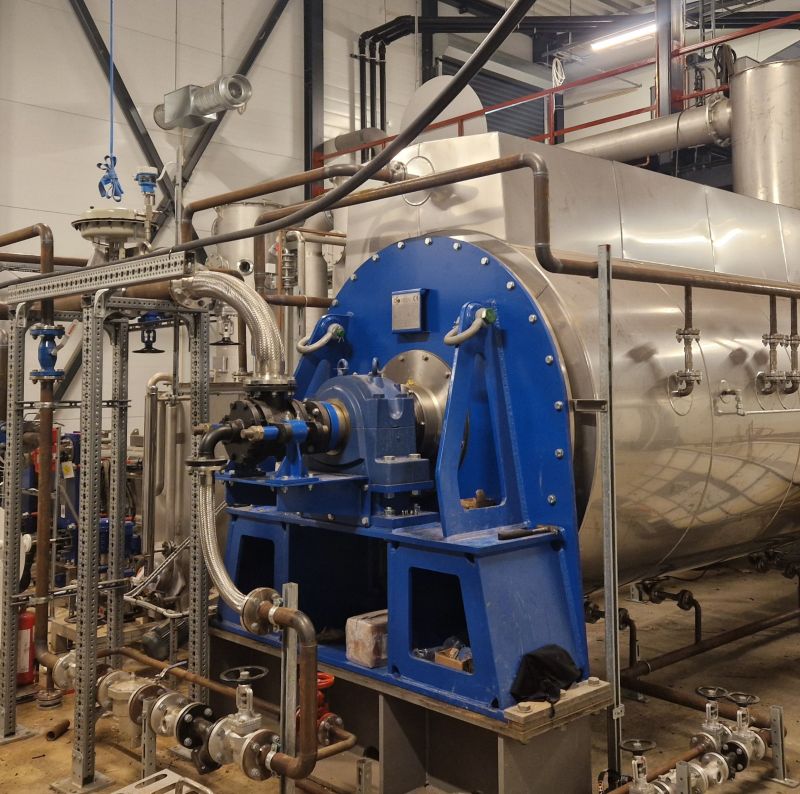
AMOF-Fjell Thermal Disc Dryers
Our Thermal Disc Dryers form the core of many of our sludge drying solutions. The indirect heating principle allows controlled heat transfer from steam or another suitable heating medium to the sludge. The rotating disc arrangement provides a large heat transfer surface within a compact design.
Depending on the application, systems can be engineered with:
Controlled sludge feeding and discharge
Recirculation of dried material
Steam heating and condensate recovery
Vapor collection and condensation
Odour treatment
Heat recovery
Automated process control and monitoring
We deliver individual dryers as well as complete systems with the required auxiliary equipment.

Test Your Material Before Investing
Container-Based Pilot Dryer
Not all sludge behaves the same way during drying.
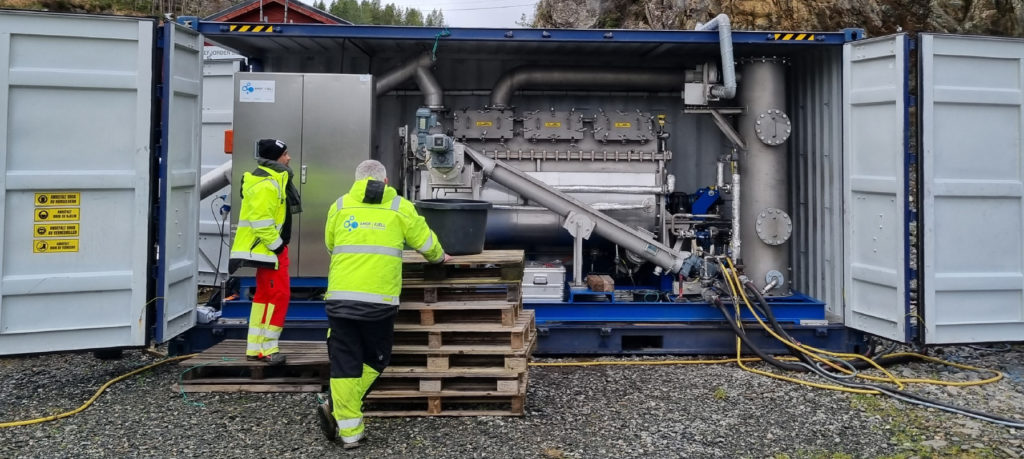
Moisture content, composition, viscosity and the tendency to become sticky can significantly affect equipment selection and process performance. AMOF-Fjell has developed a container-based test dryer for practical evaluation of different materials before selecting a full-scale drying solution. The test installation is housed in a 20-foot container and includes the dryer, feed system, controls and dried-product handling equipment.
Available operating configurations include:
Atmospheric drying
Vacuum drying, subject to configuration
Product recirculation
Steam-driven thermal drying
A separate steam generator module housed in a 10-foot container is also available.
Testing can help evaluate material behavior, drying performance, achievable dry matter content and suitable process configurations.
The equipment can be used for sludge as well as other industrial residues, biomass and by-products.

Engineering, Energy Recovery and Process Integration
AMOF-Fjell combines thermal engineering, mechanical equipment design and experience from industrial installations.
Our services include process evaluation, mass and energy balance calculations, equipment sizing, heat recovery design, process control, mechanical engineering and commissioning.
We can supply selected equipment for upgrading an existing sludge treatment facility or engineer and deliver an integrated process tailored to the customer’s requirements.
The objective is reliable operation, effective water removal and efficient utilization of available energy.
ARAL Sludge Handling Concept
AMOF-Fjell previously participated in the ARAL cooperation, a joint initiative involving AMOF-Fjell Process Technology, Ragn-Sells Havbruk, Aquapro and Liftup.
The initiative focused on sludge handling and resource utilization in aquaculture.
Although the cooperation is no longer active, sludge treatment and thermal drying remain part of AMOF-Fjell’s independent technology and engineering capabilities.
Discuss Your Sludge Treatment Project
Do you need to reduce sludge volumes, develop a resource recovery process, improve energy efficiency or evaluate a difficult material before investing in new equipment?
AMOF-Fjell can help assess treatment options, perform pilot drying trials and develop process solutions adapted to your requirements.
Contact AMOF-Fjell Process Technology to discuss your sludge treatment application.
Please Contact Our dewatering and sludge Specialist
For more information about sludge handling systems and, please contact:

Sludge dewater & drying Specialist
AMOF-Fjell Process Technology AS
Phone: (+47 ) 416 23 839
Email: och@AMOF-Fjell.com